
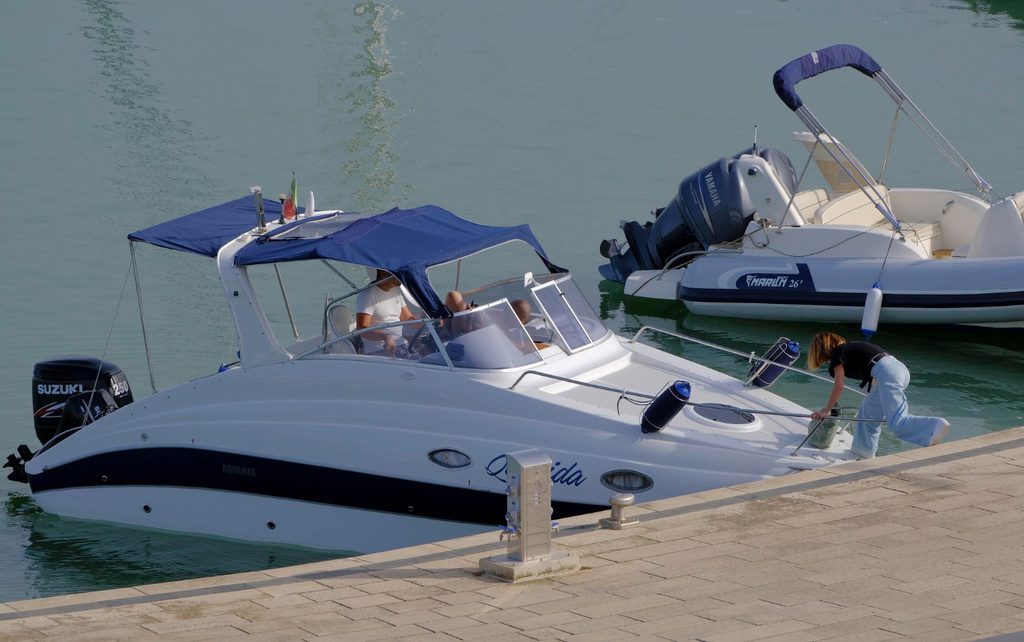
Quick SummaryA practical fiberglass boat cleaning setup does not require dozens of specialized items for every possible situation. Six dependable essentials can cover routine washing, stubborn staining, surface scrubbing, gentle application, rinsing, and drying. Choosing marine-compatible products and non-abrasive tools helps protect fiberglass surfaces while making regular cleaning simpler, especially when waterline stains, dirt, mineral residue, and other marine stains accumulate. |
Choosing the right fiberglass boat cleaning products starts with understanding what each item needs to accomplish during routine marine maintenance. A dependable cleaning setup should cover everyday washing, targeted stain treatment, gentle surface agitation, thorough rinsing, and careful drying. Having these essentials ready before starting also makes cleaning sessions easier to organize while reducing the temptation to use unsuitable household products on fiberglass surfaces.
A well-planned fiberglass boat cleaning kit can remain relatively simple while still handling the cleaning needs that arise throughout the boating season. Marine-focused cleaners, soft brushes, microfiber towels, and appropriate rinsing equipment can work together across different cleaning stages. Product selection should always consider the fiberglass surface, existing finish, staining type, and directions listed by the manufacturer before application.
A marine-safe fiberglass cleaner should form the foundation of any boat cleaning collection because it handles stains from routine dirt and surface residue, as well as other forms of marine staining without relying on harsh household formulas. Look for a cleaner specifically formulated for marine surfaces and follow its dilution and application directions carefully. A suitable general cleaner can simplify routine washing while keeping the process gentle and consistent across accessible fiberglass areas.
A dedicated stain cleaner belongs in your supplies for discoloration that remains after ordinary washing has been completed. Specialized boat stain removers can address stubborn marine staining when their directions list fiberglass as a compatible surface. Choose formulas according to the type of staining present, test unfamiliar products on an inconspicuous area, and follow application and rinsing instructions carefully to protect the existing gelcoat finish.
A soft-bristle brush helps loosen dirt and residue while reducing unnecessary abrasion against fiberglass surfaces during routine washing. Choose a brush with bristles that can agitate the surface without relying on excessive pressure, particularly around textured areas, corners, and contours. A suitable brush becomes especially useful when paired with a marine cleaner, allowing you to work through manageable sections without resorting to rough pads or abrasive tools.
A non-abrasive wash mitt or sponge helps spread cleaning solution across fiberglass surfaces while reducing unnecessary friction during routine washing. Choose a soft material that can hold plenty of water and cleaning solution without becoming rough against the surface. Keeping the mitt clean throughout the process also helps prevent trapped dirt and grit from being dragged across the fiberglass during repeated passes.
Clean microfiber towels are useful for drying fiberglass surfaces after washing and rinsing, particularly when the goal involves reducing visible water spots. Keep several towels available so damp or dirty materials can be replaced instead of repeatedly dragged across a freshly cleaned surface. Microfiber materials can also assist with light detailing and final inspections, helping identify remaining stains or residue after the boat has dried completely.
A hose with an adjustable spray nozzle makes thorough rinsing easier after cleaners have been applied and surface residue has been loosened. Start with a gentle spray for removing loose dirt and surface residue, then rinse treated sections carefully until cleaning residue has been cleared. Controlled water pressure helps limit unnecessary force against fiberglass while allowing you to reach hull contours, fittings, edges, and other difficult areas.
A dependable cleaning collection can cover routine washing and targeted stain treatment without filling your storage area with unnecessary products. Slimy Grimy Inc. focuses on marine cleaning performance, practical applications, and environmentally responsible formulas backed by decades of family-owned experience. Contact us to explore suitable cleaning solutions for fiberglass surfaces and build a cleaning routine that fits your boat.
A practical kit should include a marine-safe cleaner, stain treatment, soft brush, microfiber towels, and an adjustable hose nozzle.
Marine-specific cleaners are preferable because household formulas can contain ingredients unsuitable for fiberglass finishes and marine surfaces.
Use specialized stain treatments when routine washing leaves persistent discoloration, following product directions and surface compatibility requirements carefully.
Microfiber towels assist with gentle drying and can reduce water spots while limiting unnecessary friction against the cleaned surface.
I LEFT THE BOAT in the water for a week of scalloping & Fishing and got the nice stain line on the boat. My neighbor had some Slimy Grimy in a spray bottle & sprayed it on the line along with a rust stain from the dive ladder screws and it was amazing how Slimy Grimy cleaned the boat.
I recently discovered Slimy Grimy for getting rid of rust in tanks. It works great and won’t hurt the paint.


Slimy Grimy Inc.
slimygrimy@slimygrimy.com
(281) 468-5217
1-800-922-3097