
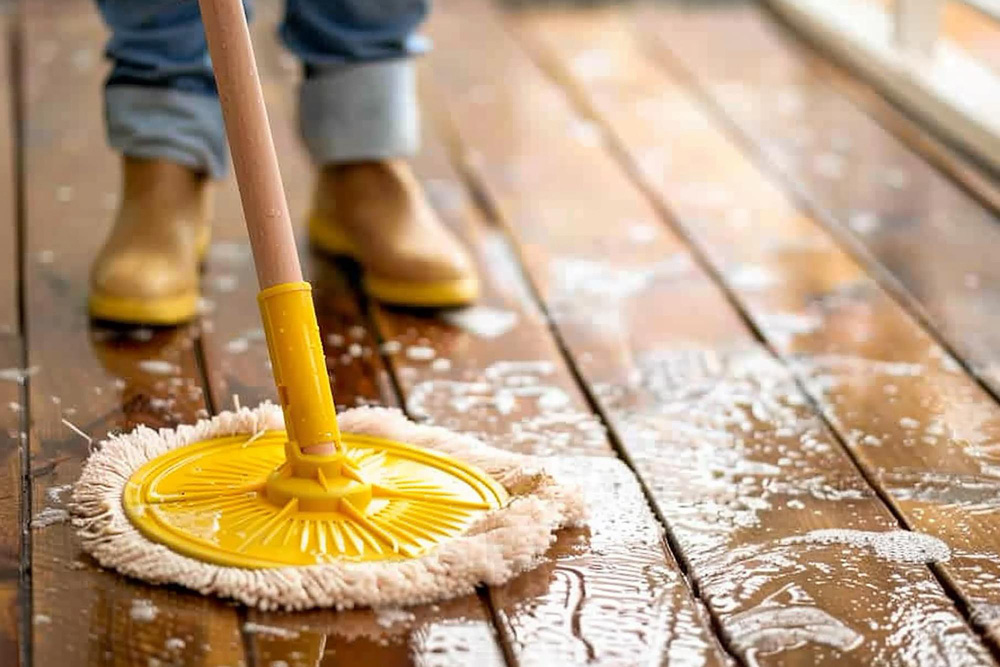
Cleaning a wood deck safely starts with gentle products, soft brushes, and steady maintenance habits. Fresh water rinses, careful drying, and small-section cleaning help protect the finish from scratches, fading, and moisture damage. Marine-safe cleaners also help remove algae stains, mildew stains, and stubborn buildup without stripping protective coatings. Avoiding pressure washers and harsh chemicals helps finished wood surfaces maintain their appearance longer with less restoration work later.
Moisture, dirt, and direct sunlight slowly wear down wood surfaces on boats and docks. Many owners clean wood deck areas too aggressively and accidentally strip away the finish. Learning how to clean a wood deck correctly helps preserve the wood while keeping the surface looking clean and well-maintained.
Strong household chemicals often dry out wood and leave visible discoloration behind. Marine-safe cleaning formulas work better because they remove grime without damaging protective coatings. Mild cleaners also reduce the risk of surface fading after repeated washes.
Many boat owners use soft marine cleaning products during routine maintenance because they leave less residue behind. Some boat stain removers also help loosen stubborn marks around seating areas, storage compartments, and walkways. Products like Slimy Grimy Original Cleaner work well on marine surfaces that collect algae stains, mildew stains, and heavy buildup.
Stiff wire brushes scratch protective finishes and leave marks across the grain. A soft-bristle deck brush removes debris while helping the finish stay intact. Microfiber cloths also work well for smaller areas and detailed corners.
Scrub lightly while following the direction of the wood grain. Aggressive back-and-forth motion creates uneven wear patterns across the surface. Gentle pressure usually removes dirt once the cleaner has time to loosen buildup.
Loose sand and dried salt act like sandpaper during scrubbing. A full rinse with fresh water removes abrasive debris before cleaning begins. This simple step helps reduce scratches across finished wood.
Fresh water also softens dried grime around seams and textured areas. Dirt lifts more easily once moisture breaks apart surface residue. Many owners skip this step and end up using more force during cleaning.
High-pressure spray damages wood fibers and weakens protective coatings over time. Water pressure may also force moisture beneath the finish, which increases the chance of peeling later. Older decks face even greater surface damage from concentrated spray patterns.
The best way to clean a deck usually involves lower water pressure and controlled scrubbing. A hose with moderate flow removes loose buildup without damaging the wood surface. Careful hand cleaning gives better long-term results than aggressive pressure washing.
Large cleaning areas dry too quickly under direct sunlight. Cleaner residue becomes harder to remove once it dries onto the surface. Working in smaller sections keeps the wood wet long enough for proper cleaning.
This method also helps owners spot stains before they spread further into the grain. Short cleaning sessions reduce streaking across finished surfaces. Many professionals follow this process during routine marine maintenance work.
Hot deck surfaces dry cleaning products much faster than shaded areas. Early morning cleaning usually gives better results because the wood stays cooler. Lower surface temperatures also help reduce streaks after rinsing.
Direct sunlight may leave uneven drying marks on darker wood finishes. Shaded work areas make cleaning easier and more controlled. Consistent moisture levels help protect the appearance of the finish.
Standing moisture may contribute to mold and mildew staining around joints and corners. Drying the deck after rinsing helps limit moisture exposure across finished surfaces. Microfiber towels absorb excess water quickly without scratching the wood.
Ventilation also helps speed up drying after cleaning sessions. Covered storage areas with trapped humidity may increase mildew problems later. Dry surfaces usually hold their finish longer than constantly damp wood.
Mold and mildew stains spread quickly across damp wood surfaces near storage compartments and seating areas. Harsh bleach mixtures may strip away finish layers while drying out the wood underneath. Marine-safe mildew stain removers clean affected areas with less surface damage.
Many owners use Slimy Grimy Mold & Mildew Stain Remover for routine deck maintenance because it targets stubborn discoloration on multiple surfaces. Regular cleaning also helps reduce moisture buildup that contributes to mildew staining. Consistent upkeep keeps finished wood looking cleaner throughout boating season.
Routine maintenance reduces the amount of heavy scrubbing needed later. Dirt, and algae become harder to remove once they sit on the surface for long periods. Frequent light cleaning usually protects finishes better than occasional deep cleaning.
Boat owners who clean wood deck surfaces regularly often notice fewer stains and less fading over time. Simple maintenance habits also help wood coatings last longer between refinishing projects. A steady cleaning schedule helps preserve the appearance of finished marine wood.
Safe cleaning habits help wood surfaces stay cleaner without unnecessary wear. Gentle tools, marine-safe cleaners, and regular maintenance routines help preserve the finish over time. Small adjustments during cleaning often make a noticeable difference in the long-term appearance of wood decks.
At Slimy Grimy Inc., we offer marine-safe cleaning products like Slimy Grimy Original Cleaner and Mold & Mildew Stain Remover for algae stain removal, mildew stain removal, tough marine buildup and routine deck care. Contact us today to learn more about our trusted cleaning solutions for boats, RVs, docks, and other outdoor surfaces.
Most boat owners clean wood deck surfaces every few weeks during boating season. Boats exposed to saltwater, heavy rain, or constant sunlight may need more frequent cleaning. Regular maintenance helps reduce algae stains, mildew stains, and finish deterioration.
The best way to clean a deck involves using marine-safe cleaners, soft-bristle brushes, and moderate water pressure. Gentle scrubbing along the wood grain helps remove dirt without scratching the surface. Avoid harsh chemicals and pressure washers because they may weaken the finish over time.
Yes. Mold and mildew trap moisture against the wood surface, which may lead to discoloration and premature wear. Routine cleaning and proper drying help reduce moisture buildup and keep the finish in better condition.
Bleach may dry out wood fibers and weaken certain finishes after repeated use. Many marine-safe cleaning products remove stains and mildew stains with less surface damage. Boat owners often choose specialized marine cleaners for regular maintenance instead of strong household chemicals.
I recently discovered Slimy Grimy for getting rid of rust in tanks. It works great and won’t hurt the paint.
I LEFT THE BOAT in the water for a week of scalloping & Fishing and got the nice stain line on the boat. My neighbor had some Slimy Grimy in a spray bottle & sprayed it on the line along with a rust stain from the dive ladder screws and it was amazing how Slimy Grimy cleaned the boat.


Slimy Grimy Inc.
slimygrimy@slimygrimy.com
(281) 468-5217
1-800-922-3097