
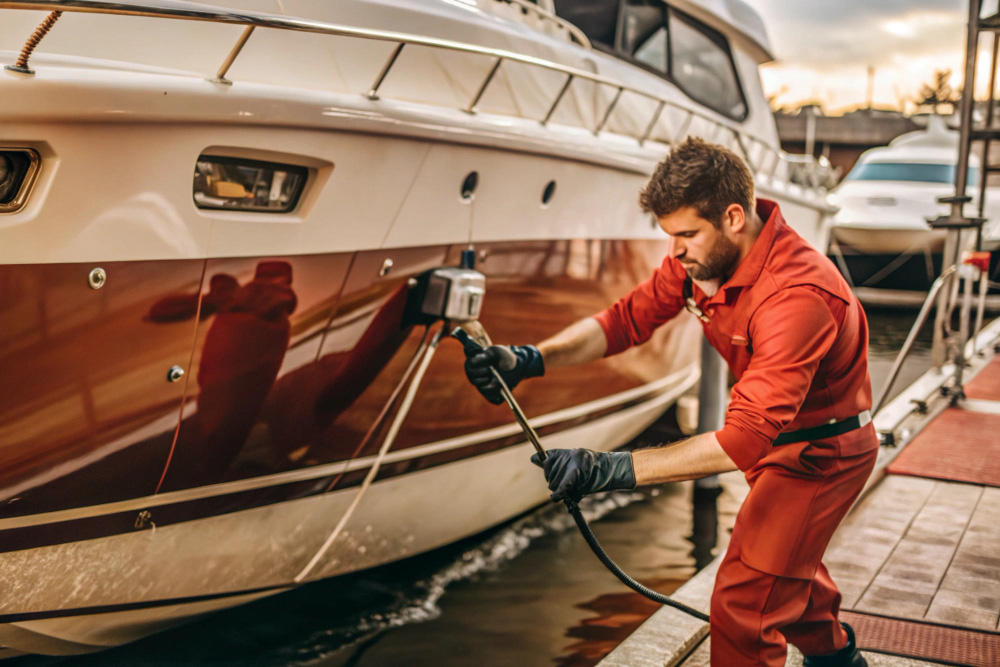
Boat cleaning for first-timers becomes easier with the right process, marine-safe products, and consistent maintenance habits. A proper routine includes rinsing, hull scrubbing, deck cleaning, mildew stain removal, and careful drying to reduce algae stains, and help minimizelong-term surface wear. Using a dependable boat cleaning solution also helps protect fiberglass, vinyl, teak, and metal surfaces from harsh marine conditions. Regular maintenance keeps future cleaning sessions shorter while helping boats maintain a cleaner and more polished appearance throughout the boating season.
Boat cleaning helps protect your hull, seats, flooring, and metal hardware from algae, mildew, and surface stains. First-time owners often feel overwhelmed by the number of tools and cleaners available for marine maintenance. Learning how to clean a boat with the proper methods can keep your vessel looking better while reducing long-term wear.
Many new owners rush into scrubbing without understanding which products work safely on marine surfaces. A marine-safe boat cleaning solution works differently from household cleaners because it targets algae stains, mildew stains, waterline stains, and oxidation without harming finishes. Some boat stain removers also help remove yellowing, rust streaks, and waterline marks that commonly appear after repeated use.
A step-by-step routine also helps first-time owners avoid damage caused by abrasive brushes or harsh chemicals. Consistent cleaning helps reduce the buildup of algae stains, waterline stains, and other common marine discoloration across the hull and deck areas. Simple maintenance habits also make future cleanups faster and less stressful.
Start with marine-safe products designed for fiberglass, vinyl, teak, and painted surfaces. Use soft brushes, microfiber towels, buckets, sponges, deck brushes, and fresh water hoses for basic cleaning work. Avoid steel wool or stiff scrubbers that can scratch gelcoat and metal surfaces.
Choose a marine cleaner that handles algae stains, mildew stains, waterline stains, and grime without leaving heavy residue behind. Multi-surface formulas help simplify the process for beginners because they work on several areas of the boat. A dependable cleaner also reduces the need for multiple specialty products. Many boat owners also use marine-safe cleaners on vinyl seating, teak decks, storage compartments, and other frequently used surfaces.
Protective gloves and eye protection help during deep cleaning sessions. Keep separate brushes for decks, upholstery, and hull surfaces to avoid spreading dirt or grease. Organizing supplies before starting saves time once the cleaning process begins.
Clear out ropes, coolers, fishing gear, and loose equipment before spraying the boat down. Sweep leaves, sand, bait residue, and debris from the deck and storage compartments. Removing loose dirt first prevents scratching during scrubbing.
Check cup holders, drains, and seat seams where grime often collects unnoticed. Small debris trapped in corners can hold moisture and create mildew over time. Dry sweeping also helps reduce muddy residue during rinsing.
Inspect the hull and deck for algae stains, oxidation, waterline stains, or dark staining before applying cleaners. Looking over the entire boat helps identify areas needing extra attention later. This quick inspection also helps first-timers plan the cleaning order more efficiently.
Fresh water rinsing loosens salt, dirt, bird droppings, and surface buildup before scrubbing begins. Start at the upper sections and work downward so debris flows off naturally. This method keeps dirty water from running across already cleaned areas.
Focus closely on railings, cleats, hatches, and textured flooring where residue often settles. Saltwater boats need thorough rinsing to address corrosion on metal components early. A slow rinse also softens dried grime before cleaning products touch the surface.
Do not let soap dry on the boat during warm weather. Work in smaller sections when cleaning under direct sunlight. Shaded areas often produce cleaner results with less streaking.
Apply marine-safe cleaner directly onto stained hull sections using a sponge or soft brush. Waterline marks, algae stains, and discoloration often need gentle agitation to loosen fully. Scrub with steady pressure instead of aggressive force.
Routine hull cleaning helps reduce the accumulation of algae stains, waterline stains, and hull discoloration below the waterline. Thick algae and barnacle buildup can affect performance and fuel efficiency over time. Many first-time owners underestimate how quickly bottom growth develops after repeated use.
Rinse each section immediately after scrubbing to prevent residue from drying onto fiberglass. Continue around the boat in manageable sections for better consistency. Patience helps produce cleaner and more even results.
Non-skid surfaces trap dirt, sunscreen residue, fish scales, and mildew more easily than smooth fiberglass. Apply a deck-safe cleaner and use a medium-bristle brush to clean textured flooring thoroughly. Circular motions often work better across rough deck patterns.
Avoid waxing non-skid areas because slick surfaces increase slipping hazards onboard. Rinse away all cleaner residue after scrubbing the deck completely. Leftover soap can attract dirt faster after the boat dries.
Pay close attention to corners near seating, ladders, and storage hatches. High-traffic areas usually collect the heaviest buildup during boating season. Consistent deck cleaning also helps reduce mildew odors.
Marine vinyl seats collect sunscreen, moisture, dirt, and mildew during regular boating trips. Spray vinyl-safe cleaner onto seating surfaces and wipe them gently using microfiber towels. Avoid oversaturating cushions with water during interior cleaning.
Storage compartments and cabin spaces also need routine attention. Wipe walls, counters, and hard surfaces to remove moisture and help reduce mildew staining. Open compartments afterward so air circulation can help with drying.
Use soft cloths on instrument panels and screens to avoid scratches. Harsh chemicals can damage clear plastics and electronic displays over time. Gentle cleaning methods preserve interior finishes longer.
Moist marine environments create ideal conditions for mildew staining. Dark spots commonly appear around seat stitching, storage compartments, canvas covers, and shaded corners. Cleaning these areas early prevents staining from spreading deeper into materials.
Use a marine-safe mildew remover designed for boats and RV surfaces. Products made for marine use help remove mildew stains and organic staining without damaging surrounding materials. Good ventilation also helps reduce future mildew growth inside enclosed spaces.
Dry towels and airflow remain important after cleaning mildew-prone areas. Leaving moisture trapped behind cushions or covers encourages future growth. Keeping boats dry between trips helps reduce recurring problems.
Dry the entire boat using microfiber towels or marine drying cloths after rinsing. Water spots often appear quickly on glass, metal, and dark-colored surfaces under direct sunlight. Careful drying creates a cleaner final appearance.
Apply protective wax or polish onto smooth fiberglass surfaces if needed. Protective coatings help reduce oxidation and staining between cleanings. Avoid applying wax onto textured walking areas or vinyl seating.
Regular cleaning schedules keep future maintenance simpler for first-time boat owners. Small cleaning sessions after each trip usually take less effort than seasonal deep cleaning projects. Consistency keeps boats looking cleaner throughout the boating season.
Boat cleaning becomes easier once first-time owners follow a consistent routine and use marine-safe products designed for tough buildup. Careful cleaning habits help reduce algae stains, mildew stains, waterline stains, oxidation, and surface wear across every part of the boat. A simple maintenance schedule also keeps future cleaning sessions shorter and more manageable.
At Slimy Grimy Inc., we offer the Slimy Grimy Original cleaner for boat hull cleaning, boat bottom stain removal, algae stain removal, mildew stain removal, teak cleaning, vinyl cleaning, and routine boat maintenance. Contact us today to learn more about our marine-safe boat cleaning products and long-standing cleaning solutions trusted for more than 50 years.
Most boats benefit from light cleaning after every trip and deeper cleaning every few weeks during boating season. Saltwater boats usually need more frequent rinsing because metal parts and finishes can get damaged over time. Regular maintenance also helps reduce algae stains, mildew stains, and waterline stains.
Avoid household bleach, dish soap, abrasive scrubbers, and harsh degreasers on marine surfaces. These products can damage gelcoat, dry out vinyl, strip wax, or discolor teak and painted areas. Marine-safe cleaners work better for boats because they target algae stains, mildew stains, waterline stains, and other common marine discoloration without harming finishes.
Yes, regular hull cleaning helps reduce algae stains, waterline stains, and hull discoloration before it becomes harder to remove. Routine bottom maintenance also improves the appearance and condition of the boat over time. Consistent cleaning helps reduce the buildup of stains and discoloration below the waterline, making future cleaning easier.
Use microfiber towels or marine drying cloths to remove water from fiberglass, glass, vinyl, and metal surfaces. Drying the boat fully helps reduce water spots, mildew growth, and streaking after rinsing. Opening storage compartments and allowing airflow also helps remove trapped moisture inside the boat.
Many marine-safe cleaners work on fiberglass, vinyl, teak, painted surfaces, and metal hardware. Multi-surface products simplify the cleaning process for first-time owners because fewer specialty products are needed. Always test cleaners on a small area first before applying them across larger sections.
I recently discovered Slimy Grimy for getting rid of rust in tanks. It works great and won’t hurt the paint.
I LEFT THE BOAT in the water for a week of scalloping & Fishing and got the nice stain line on the boat. My neighbor had some Slimy Grimy in a spray bottle & sprayed it on the line along with a rust stain from the dive ladder screws and it was amazing how Slimy Grimy cleaned the boat.


Slimy Grimy Inc.
slimygrimy@slimygrimy.com
(281) 468-5217
1-800-922-3097