
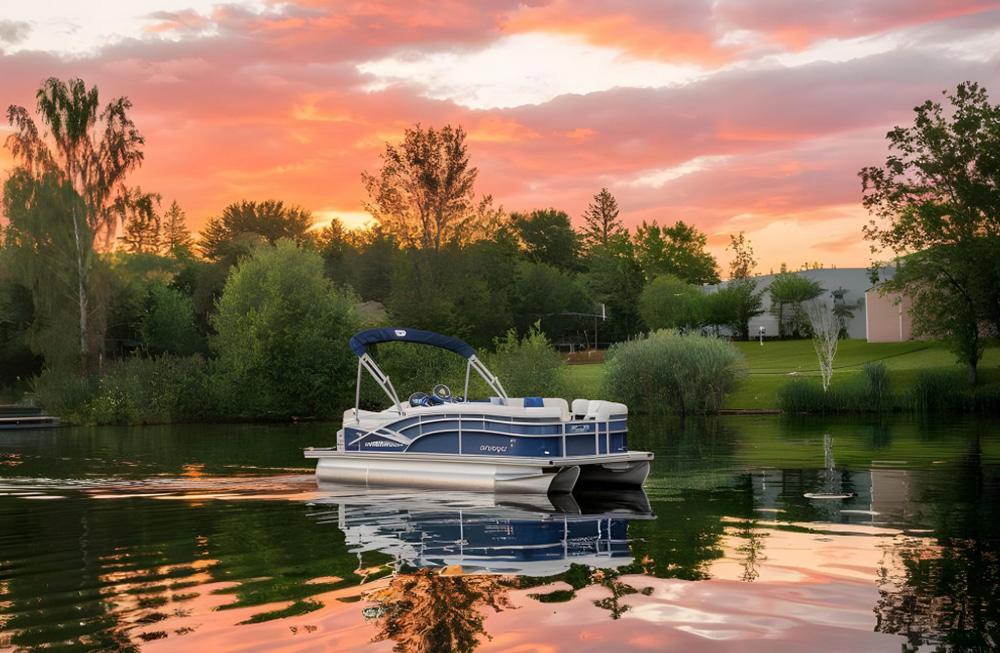
Pontoon tubes face constant exposure to waterline mineral deposits, marine stains, and oxidation that ordinary soap cannot remove. Cleaning them correctly involves working section by section with aluminum-safe products, polishing to restore shine, and sealing the surface to slow future buildup. Consistent maintenance is what prevents restoration from becoming an ongoing project.
Pontoon boats spend a lot of time in the water, and the aluminum tubes take the brunt of it. Waterline stains, oxidation, and marine stains build up fast, and once they set in, a simple rinse won’t cut it.
Knowing how to clean pontoons properly is the difference between a boat that looks years old and one that still turns heads at the dock. At Slimy Grimy Inc., we’ve seen what neglect does to aluminum, and that the right cleaning approach makes restoration far more manageable than people expect.
Preparation matters before any cleaning product touches the surface. A thorough rinse removes loose debris and gives the cleaner direct access to stains and oxidation.
Here are the first steps:
Getting these basics in place sets you up for a cleaner result without wasting product or effort.
Waterline stains are among the most persistent problems pontoon owners encounter. Mineral deposits and marine residue accumulate right where the aluminum meets the water, and ordinary soap is rarely effective against them.
Oxidation is a separate issue, but just as common. Aluminum naturally oxidizes when exposed to air and water, forming a dull, chalky layer that dulls the surface and resists standard cleaning. A purpose-built boat stain remover is the most practical solution here. Products formulated for aluminum are designed to lift marine stains and break down oxidation without corroding the metal.
Avoid muriatic acid, as it’s highly corrosive on aluminum, causes etching, and leaves the surface looking streaky and white. The short-term result isn’t worth the long-term damage it causes.
Apply your cleaner to one section, let it dwell for the time the product recommends (usually 5 to 10 minutes), then scrub with a soft-bristle brush. Rinse completely before moving to the next area. Repeating this process methodically across both tubes is what produces a uniform, streak-free finish.
Once the tubes are handled, the rest of the boat deserves the same attention. Work from the top down so dirty runoff doesn’t fall onto areas you’ve already cleaned.
Our Slimy Grimy Liquid 32 oz. Spray is a go-to option for tackling grime and stains across various boat surfaces, with a formula designed to handle what marine environments throw at them. For larger areas, Slimy Grimy Granular can be mixed with water and applied according to the product directions.
Cleaning removes the staining and oxidation. Polishing is what brings the shine back.
A quality aluminum polish works into the metal to eliminate remaining dullness and create a reflective surface. Apply the polish using a polishing ball attached to a cordless drill, then finish with a clean terry cloth. This step requires patience, but it produces results that closely resemble a factory finish without professional detailing.
Owners researching how to clean pontoons often discover that polishing is what truly transforms the appearance of the tubes.
Freshly polished aluminum is more vulnerable to oxidation and staining until it is protected. Moving directly into the sealing stage helps preserve the work you’ve done.
Protection is what makes the cleaning last. A marine-grade wax or polymer sealant applied after polishing creates a barrier that slows future oxidation and makes marine stains easier to remove next time.
Products like Sharkhide create a non-porous surface on the aluminum tubes, making it harder for staining agents to take hold. This step is what separates a boat that holds its appearance for a season from one that needs deep cleaning every few weeks.
Restoration is usually a one-time effort. Maintenance is what prevents you from repeating it.
A quick rinse after each outing goes a long way. Performing a light cleaning every few weeks during the season keeps buildup from becoming stubborn. A complete deep cleaning, including polishing and sealing, is generally recommended once or twice a year, depending on how much time the boat spends in the water.
Boats kept outdoors or used frequently in warm, humid climates may need more attention. A quality cover between uses also reduces how much debris and staining accumulates on the surface.
Knowing how to clean pontoons is one thing. Staying consistent with it is what protects the investment in the long term. A well-maintained pontoon holds its appearance and its value, and the cleaning process gets easier the more regularly it’s done. Browse all of our Boat Cleaning Guides for step-by-step help.
If you’d like guidance on products suited to your boat’s surfaces and conditions, reach out to us today.
A pressure washer works well for rinsing heavy debris, but use a wide-angle nozzle and maintain a safe distance. Too much direct pressure can blow out seams, lift decals, and damage the aluminum surface over time.
A full deep clean, including polishing and sealing, is generally recommended once or twice a year. Boats used frequently in warm climates or saltwater environments may require more frequent attention to prevent staining and oxidation.
A 50/50 mix of white vinegar and water can help loosen mild waterline stains without damaging the metal. It works best as a starting point for light deposits. However, heavier marine-related buildup, stains, and oxidation will require a purpose-built aluminum-safe cleaner.
I recently discovered Slimy Grimy for getting rid of rust in tanks. It works great and won’t hurt the paint.
I LEFT THE BOAT in the water for a week of scalloping & Fishing and got the nice stain line on the boat. My neighbor had some Slimy Grimy in a spray bottle & sprayed it on the line along with a rust stain from the dive ladder screws and it was amazing how Slimy Grimy cleaned the boat.


Slimy Grimy Inc.
slimygrimy@slimygrimy.com
(281) 468-5217
1-800-922-3097