
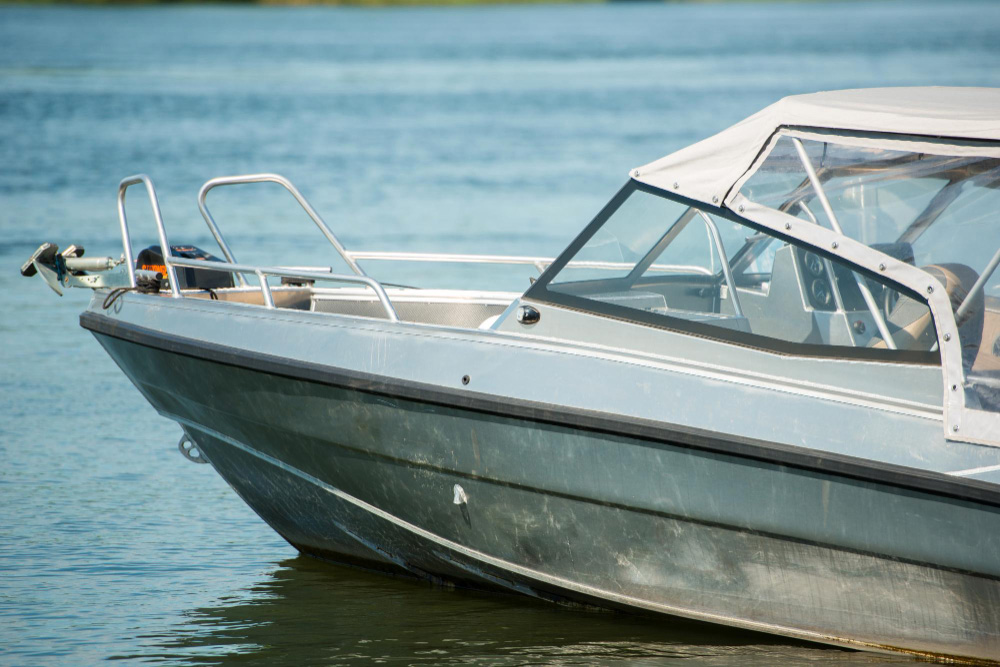
Soap and water alone won’t restore an aluminum boat’s finish because oxidation bonds chemically to the surface and requires a purpose-built cleaner to lift. A full cleaning sequence moves through washing, aluminum-specific cleaning, polishing, and sealing, with each step building on the last. Sealing after polishing is what makes the shine last, and a wax or sealant refresh every few months keeps restoration from becoming a major project. Rinsing after every outing and storing with UV protection are the habits that slow deterioration between deep cleans.
Aluminum boats are workhorses. They handle rough conditions, hold up in saltwater, and take years of hard use without losing their structural integrity. What they lose without proper care is their finish. Oxidation, waterline staining, and marinegrowth stains build up fast, and soap and water alone won’t touch them.
Aluminum appears strong and uniform, which causes many owners to assume that any cleaner will do the job. Unfortunately, that is not the case. Household detergents may strip important surface properties and sometimes contain salts that speed up corrosion. Aluminum requires cleaning, brightening, polishing, and sealing. Leaving out any of these steps can result in dull, chalky surfaces that become increasingly difficult to restore.
Oxidation is the main culprit. When aluminum is exposed to air and water, a layer of aluminum oxide forms on the surface. It dulls the finish and creates a chalky appearance. It won’t respond to scrubbing alone. A purpose-built aluminum cleaner breaks it down chemically, which is why product selection matters as much as technique.
At Slimy Grimy Inc., our marine stain remover is a practical option for lifting stubborn waterline and marine stains from aluminum surfaces. Mix with water and apply with a pump sprayer for larger jobs.
Cleaning on a hot day creates problems before you’ve even begun. Direct sunlight heats aluminum quickly, and the metal becomes too hot to work with comfortably. Cleaners also dry on the surface faster than you can rinse them, which leads to streaking. Park the boat in a shaded spot on its trailer and give yourself room to move around the hull.
Rinse the entire surface thoroughly with fresh water first. This removes loose salt, debris, and surface grime before any cleaner is applied. Skipping this step means your cleaner is working through a layer of loose dirt rather than making direct contact with the oxidation and staining underneath. Wear protective gloves and eye protection throughout, especially when working with aluminum-specific cleaners.
Work through this sequence for a thorough result:
Quality boat stain removers designed for aluminum surfaces make the cleaning and brightening steps significantly more effective than general-purpose products.
Sealing the hull after polishing does more than maintain the shine. A properly sealed surface resists salt buildup, slows oxidation caused by UV exposure, and sheds water instead of holding it. Less buildup between cleanings means less effort the next time maintenance is required.
A wax or sealant refresh every three to six months is a reasonable maintenance schedule for most boats. Boats used heavily in saltwater or stored outdoors may need more frequent attention.
Keeping aluminum looking good doesn’t require a full restoration process every season. A few consistent habits reduce how much work is needed at any given time:
The shine is satisfying, but the performance benefits are just as real.
A clean hull creates less drag, improves fuel efficiency, and helps maintain resale value. Consistent maintenance also helps identify minor surface issues before they become corrosion problems that are much more expensive to address.
Connect with our team if you have questions about the right products or approach for your aluminum boat’s condition. We’ll help you work out a cleaning and maintenance routine that keeps your boat performing and looking its best on the water.
Yes, but expect more work. Unsealed aluminum oxidizes faster and more deeply, so you may need a metal restorer before polish makes a visible difference. Once the oxidation is cleared and the surface is polished, applying a sealant immediately afterward prevents the buildup from returning as quickly.
The white, chalky layer is aluminum oxide, formed when aluminum reacts with oxygen and moisture over time. UV exposure and saltwater accelerate the process. It won’t scrub off with soap because it has chemically bonded to the surface, which is why an aluminum-specific cleaner or brightener is needed to break it down.
A pressure washer can help remove loose debris and surface grime during the initial rinse, but keep the nozzle at a wide angle and maintain a safe distance. Too much direct pressure on aluminum can dent softer sections, damage seams, or strip protective coatings before you’ve had a chance to reapply them.
I LEFT THE BOAT in the water for a week of scalloping & Fishing and got the nice stain line on the boat. My neighbor had some Slimy Grimy in a spray bottle & sprayed it on the line along with a rust stain from the dive ladder screws and it was amazing how Slimy Grimy cleaned the boat.
I recently discovered Slimy Grimy for getting rid of rust in tanks. It works great and won’t hurt the paint.


Slimy Grimy Inc.
slimygrimy@slimygrimy.com
(281) 468-5217
1-800-922-3097