
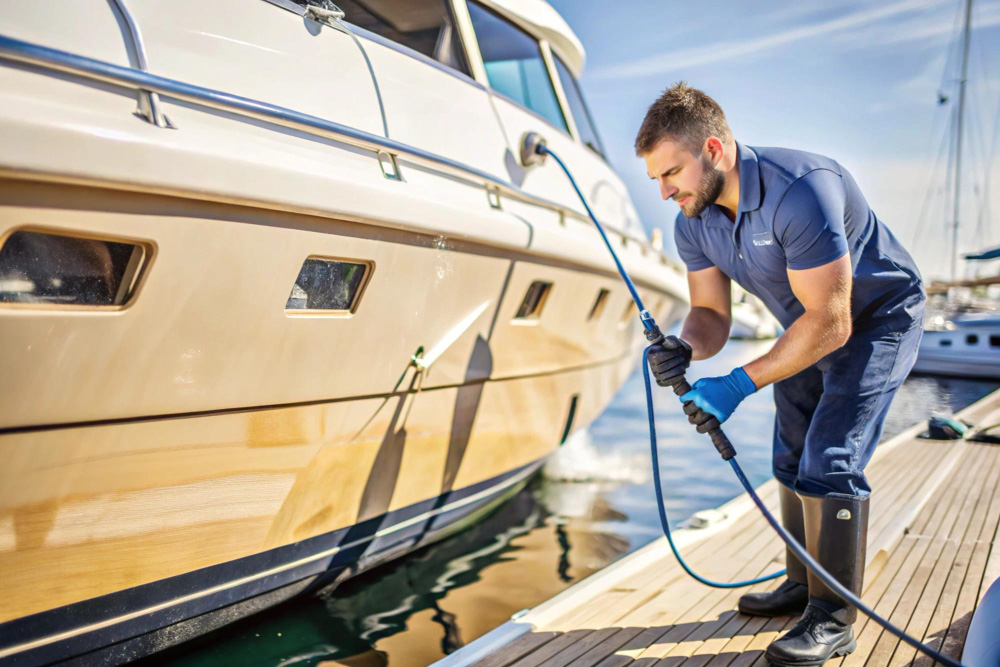
Regular boat maintenance helps reduce algae stains, corrosion, mildew and mold staining, and surface damage throughout the boating season. Cleaning the hull, teak, bilges, and engine areas on a consistent schedule helps maintain performance and appearance while lowering long-term repair costs. Wood boat maintenance also requires careful cleaning and moisture control to protect natural surfaces. Marine-safe cleaners, routine inspections, and proper storage habits help boat owners keep vessels cleaner, safer, and ready for the water.
Boat maintenance plays a major role in protecting your investment and keeping your vessel ready for every trip on the water.lgae stains, moisture, and sunlight can slowly wear down surfaces, hardware, and wood finishes without regular care. A consistent cleaning routine also helps reduce long-term repair costs and keeps your boat looking its best.
Dirt, organic buildup, and marine residue can damage surfaces if they stay on the hull too long. Rinsing your boat with fresh water after every outing helps reduce corrosion and staining on metal, fiberglass, and painted surfaces. Focus on rails, decks, ladders, and areas where grime collects quickly.
Many boat owners keep boat stain removers on hand for rust streaks, mildew stains, and waterline discoloration. Quick treatment helps prevent stains from settling into fiberglass or painted areas. Light cleaning throughout the season often reduces the need for aggressive scrubbing later.
A marine-safe cleaner works well for removing residue without harming nearby water systems. Slimy Grimy Original Cleaner is commonly used for removing heavy buildup from hulls, decks, and marine surfaces exposed to algae stains and waterline stains. Regular washing also helps boat owners spot small issues before they become expensive repairs.
The hull handles constant exposure to water, debris, and marine growth staining throughout the boating season. Frequent inspections help identify cracks, blisters, algae staining, or surface damage before conditions worsen. Pay close attention to areas near the waterline and transom.
Routine bottom cleaning removes barnacles, slime, and algae that increase drag in the water. Heavy marine stains can also affect fuel efficiency and overall handling. Marine staining prevention maintenance helps reduce long-term buildup while keeping the bottom cleaner between major cleanings.
Boat owners in warm coastal areas often clean the hull more frequently due to faster algae staining. Freshwater boats can still develop staining and slime, especially during long periods in the water. A dependable marine cleaner helps break down buildup without damaging surrounding finishes.
Teak remains a popular material for decks, trim, and seating because of its durability and appearance. Dirt, mildew, and moisture can slowly darken the wood if owners skip routine cleaning. Teak also becomes slippery when grime builds across the surface.
Teak cleaning applications remove discoloration while helping preserve the natural appearance of the wood. Gentle scrubbing with the proper cleaner helps avoid unnecessary wear on older wood surfaces. Boat owners should avoid harsh household chemicals that may dry out or damage teak over time.
Wood boat maintenance also includes watching for cracks, splintering, and fading caused by sunlight. Applying the right treatment after cleaning helps the wood maintain a cleaner finish longer. Regular attention keeps teak surfaces safer and more attractive throughout the season.
Moisture trapped inside compartments can lead to mold, mildew, and unpleasant odors. Bilges should stay clean and dry to reduce corrosion and hidden water damage. Owners should inspect pumps, hoses, and drains regularly during boat maintenance checks.
Mold and mildew stain removal becomes easier when boat interiors receive regular ventilation and cleaning. Storage compartments, cushions, and enclosed cabins often collect moisture during humid weather. A marine-safe cleaner can help remove mildew stains from fiberglass, vinyl, and hard surfaces.
Boat owners should also empty standing water after storms or long storage periods. Damp conditions often lead to staining around corners and seams. Clean interiors create a more comfortable environment during fishing trips, cruises, and overnight stays.
Marine engines operate under demanding conditions throughout the boating season. Routine inspections help reduce the risk of overheating, fuel issues, and corrosion around moving parts. Boat owners should follow manufacturer service intervals closely.
Flushing the engine after use helps remove deposits from internal cooling passages. Oil changes, fuel filter inspections, and battery checks also help maintain steady performance. Clean engine compartments make it easier to notice leaks, loose wiring, or worn hoses.
Boat maintenance should also include steering systems, propellers, and electrical connections. Corrosion around terminals can affect reliability during operation. Lubricating moving parts helps reduce friction and wear during long-term use.
Wooden boat maintenance requires close attention because wood reacts differently to water, heat, and sunlight than fiberglass or aluminum. Owners should inspect joints, seams, and fasteners regularly for signs of moisture intrusion or soft spots. Early repairs help reduce larger restoration work later.
Protective coatings help shield wooden surfaces from UV exposure and moisture damage. Boats stored outdoors often need more frequent inspections because weather conditions accelerate wear. Slimy Grimy Original Cleaner works well for teak cleaning applications and removing grime that collects on exposed wood surfaces.
Many owners combine wooden boat maintenance with regular deck cleaning to reduce algae stains and mildew stains. Mold and mildew stain removal also helps preserve the appearance of wood trim, seating, and storage compartments over time. A steady care routine helps wooden boats maintain their appearance and structural condition for years.
Storage habits affect the condition of your boat throughout the year. Dirt, trapped moisture, and direct sunlight can slowly damage surfaces during long periods of inactivity. Proper covering and ventilation help reduce unnecessary wear.
Boat covers help block rain, debris, and UV exposure while keeping interiors cleaner. Owners should still allow airflow to reduce trapped humidity under covers. Dry storage conditions also help limit mold-related staining inside cabins and compartments.
Before long-term storage, many boat owners complete a full cleaning and bottom inspection. Removing algae stains and marine buildup before storage helps protect surfaces during the off-season. Organized maintenance records also help track service intervals and repairs over time.
A consistent cleaning schedule helps reduce corrosion, marine staining, and moisture-related damage across your vessel. Boat owners who stay ahead of small problems often spend less time handling major repairs later. Simple maintenance habits also help preserve appearance, safety, and performance throughout the boating season.
At Slimy Grimy Inc., we offer marine-safe cleaning products designed for hull cleaning, teak care, mildew stain removal, and routine bottom cleaning. Contact us today to learn more about Slimy Grimy Original Cleaner and our algae stain and marine stain removal solutions for long-term boat maintenance.
Most boat owners clean the hull every few weeks during boating season, especially in freshwater environments where algae staining and marine staining become more noticeable. Boats stored in fresh water year-round may need more frequent inspections and bottom cleaning. Regular cleaning helps reduce drag, staining, and buildup that can affect performance.
Boat owners should clean mildew stains quickly to prevent stains and odors from spreading across surfaces. Marine-safe cleaners designed for fiberglass, vinyl, and hard surfaces work well for removing buildup without damaging materials. Good ventilation and dry storage conditions also help reduce recurring moisture problems.
Teak surfaces face constant exposure to sunlight, moisture, and dirt during boating season. Routine cleaning helps preserve the wood’s natural appearance while reducing slippery buildup and discoloration. Regular teak care also helps extend the life of decks, trim, and seating areas.
Routine boat maintenance should include inspections of the hull, engine, bilges, hoses, batteries, propellers, and wood surfaces. Owners should also check for leaks, corrosion, loose fittings, and marine stains around the waterline. Catching small problems early often helps reduce expensive repairs later.
Some marine-safe cleaners also work on RVs, toilets, outdoor equipment, and other hard surfaces affected by stains, algae stains, or mildew stains. Multi-surface products help remove tough grime while remaining safer for marine environments. Always follow product instructions before applying cleaners to new surfaces.
I recently discovered Slimy Grimy for getting rid of rust in tanks. It works great and won’t hurt the paint.
I LEFT THE BOAT in the water for a week of scalloping & Fishing and got the nice stain line on the boat. My neighbor had some Slimy Grimy in a spray bottle & sprayed it on the line along with a rust stain from the dive ladder screws and it was amazing how Slimy Grimy cleaned the boat.


Slimy Grimy Inc.
slimygrimy@slimygrimy.com
(281) 468-5217
1-800-922-3097